Beware of the Chair: The Health Effects of Prolonged Sitting
Why movement matters—and practical ways to make your workstation and daily routine healthier.
Modern life has made prolonged sitting a routine part of our day. We sit while commuting, working, eating, using computers, and relaxing at home. For many people, these hours accumulate without much opportunity for movement.
Although sitting is a normal and necessary activity, spending much of the day sedentary may contribute to long-term health risks. Research has associated greater sedentary time with cardiovascular disease, type 2 diabetes, and premature mortality. Prolonged, uninterrupted sitting can also contribute to stiffness, discomfort, and reduced tolerance for sustained positions.
The solution is not to eliminate sitting. It is to move more frequently, vary our positions, and develop sustainable habits that support long-term health.
Understanding the Risks of Prolonged Sitting
Sedentary behavior refers to waking activities performed while sitting, reclining, or lying down that require very little energy.
Research suggests that both total sedentary time and the amount of moderate-to-vigorous physical activity we perform influence long-term health outcomes. Regular exercise is important and may substantially reduce the risks associated with high sedentary time.
Prolonged sitting can also affect musculoskeletal comfort. Remaining in one position for extended periods may contribute to neck discomfort, back pain, shoulder fatigue, or stiffness, particularly when the workstation does not accommodate the individual.
Importantly, no single sitting posture is inherently harmful for everyone. The ability to change positions, maintain physical capacity, and adjust the environment to personal needs may be more valuable than attempting to maintain one supposedly perfect posture throughout the day.
Three Lines of Defense Against Prolonged Sitting
1. Interrupt Sitting Throughout the Workday
One of the simplest strategies is to interrupt prolonged periods of inactivity.
Try taking a brief movement break approximately every 30 minutes. This is a practical starting point rather than a rigid rule. Some individuals may benefit from moving more frequently, while others may need to adapt the schedule to their work demands or physical capabilities.
Movement breaks do not require strenuous exercise. Consider:
- Standing and walking for a few minutes.
- Performing comfortable calf raises or sit-to-stand repetitions.
- Changing your working position.
- Walking to speak with a colleague rather than sending an email.
- Performing gentle shoulder, neck, or trunk movements.
- Alternating between seated and standing work when your workstation allows.
The goal is not to perform a demanding workout every half hour. It is to reduce uninterrupted sedentary time and give the body opportunities to move.
Take 5 Every 30: Use this simple reminder to establish a movement habit, adjusting the frequency and duration to your individual needs.
Workstation Break Exercises — Printable PDF
2. Increase Movement Outside the Workplace
For individuals whose occupations require substantial sitting, physical activity outside work becomes particularly important.
Walking, cycling, swimming, resistance training, gardening, recreational sports, and other enjoyable activities can help maintain physical capacity and support cardiovascular and metabolic health.
Rather than focusing exclusively on eliminating television or other seated activities, consider incorporating movement into your existing routine.
For example, take a walk before dinner, schedule regular recreational activities with family or friends, or interrupt extended periods of screen time with brief movement breaks.
Consistency matters more than finding one perfect exercise program.
Adults who are able to do so can work toward established physical activity recommendations, including 150–300 minutes of moderate-intensity aerobic activity per week and muscle-strengthening activities on at least two days.
Individuals with chronic illness, exercise intolerance, orthostatic symptoms, or post-exertional symptom exacerbation may require a substantially different approach. Activity recommendations should be individualized, particularly for people with conditions such as POTS, hEDS, or ME/CFS.
3. Optimize Your Workstation for Comfort and Movement
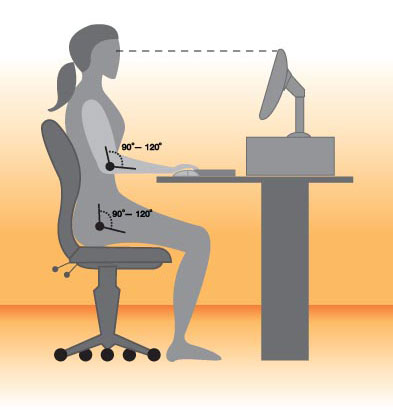
Workstation ergonomics can help reduce unnecessary physical demands and improve comfort during prolonged computer use.
However, ergonomics should not be reduced to forcing the body into one fixed position.
The best workstation is one that accommodates the individual, supports the tasks being performed, and permits regular changes in posture.
Chair and Seating Considerations
- Adjust seat height to allow comfortable support of the feet.
- Use a footrest when needed.
- Select a seat depth that supports the thighs without excessive pressure behind the knees.
- Adjust lumbar support according to comfort and individual spinal preferences.
- Position armrests, when used, to support the arms without elevating the shoulders.
- Change seated positions periodically rather than maintaining a rigid posture.
Computer and Desk Position
- Position the monitor directly in front of you at a comfortable viewing distance.
- Adjust monitor height to avoid sustained, uncomfortable neck positioning.
- Keep the keyboard and mouse close enough to avoid unnecessary reaching.
- Allow the shoulders and upper arms to remain reasonably relaxed.
- Adjust lighting and screen settings to reduce visual strain.
- Consider a sit-to-stand workstation when appropriate, recognizing that prolonged standing is not necessarily preferable to prolonged sitting.
Movement and Position Variation
Simple changes in position can be helpful throughout the day. Some individuals find temporary lumbar supports, adjustable seating, or alternate working positions useful.
These strategies should be guided by comfort, functional needs, and individual responses rather than universal rules.
Workstation Stretches — Printable PDF
When Should You Consult a Physical Therapist?
Occasional discomfort associated with prolonged positioning is common. However, persistent pain, recurrent symptoms, neurological complaints, or difficulty tolerating ordinary work activities may warrant professional assessment.
A physical therapist can evaluate the interaction between physical capacity, movement patterns, occupational demands, and individual health conditions.
Treatment may involve workstation modifications, progressive strengthening, movement education, symptom-management strategies, or individualized rehabilitation.
For people with complex chronic conditions, recommendations should reflect their specific physiology and activity tolerance rather than relying on generic exercise prescriptions.
The Bottom Line: Get Active to Stay Active
Our bodies benefit from movement, but modern environments often make prolonged inactivity the easiest option.
Fortunately, meaningful changes do not necessarily require expensive equipment or dramatic lifestyle modifications.
Begin with manageable movement breaks, adjust your workstation for comfort, and build physical activity into your routine according to your individual capabilities.
The goal is not perfect posture. It is greater movement opportunity, improved physical capacity, and healthier habits over time.
Christopher W. Harper, PT, DPT, OCS
Originally published January 7, 2016. Revised edition.
References and Further Reading
Biswas A, et al. Sedentary time and its association with risk for disease incidence, mortality, and hospitalization in adults: A systematic review and meta-analysis. Ann Intern Med. 2015;162(2):123–132.
Grøntved A, et al. Television viewing and risk of type 2 diabetes, cardiovascular disease, and all-cause mortality: A meta-analysis. JAMA. 2011;305(23):2448–2455.
World Health Organization. WHO Guidelines on Physical Activity and Sedentary Behaviour. 2020.
Ekelund U, et al. Does physical activity attenuate, or even eliminate, the detrimental association of sitting time with mortality? A harmonised meta-analysis. Lancet. 2016;388:1302–1310.
Editorial note: References should be verified and updated against the latest available literature before publication.
Beware of the Chair
Today 86% of employed Americans have jobs that require them to sit for the entire workday. Between sitting to eat, commuting, sitting at work, returning home and watching television we sit an average of 9.3 hours per day. Humans were designed to move, not to be sedentary, and the modern world makes it difficult to combat the deskbound trend. All this sitting is detrimental to your health, not only causing orthopedic issues through postural stress but also physiological declines that can shorten your lifespan. The latest research has resulted in the slogan “sitting is the new smoking”; here are the facts:
- People with sitting jobs have twice the rate of cardiovascular disease as people with standing jobs
- Sitting 6 hours per day makes you up to 40% likelier to die within 15 years than someone
- who sits less than 3 hours or less. This remains true even if you exercise
- Obese people sit for 2.5 more hours per day than weight appropriate people, currently 1 in 3 Americans are obese
- Between 1980 and 2000 exercise rates have remained the same while sitting time has increased by 8% and obesity has doubled